Blog / October 23, 2026 · 5 min read
Distributor vs Direct to Stores: Which Channel to Build First
Tags:Distributors, Independent stores, Channel strategy, Unit economics
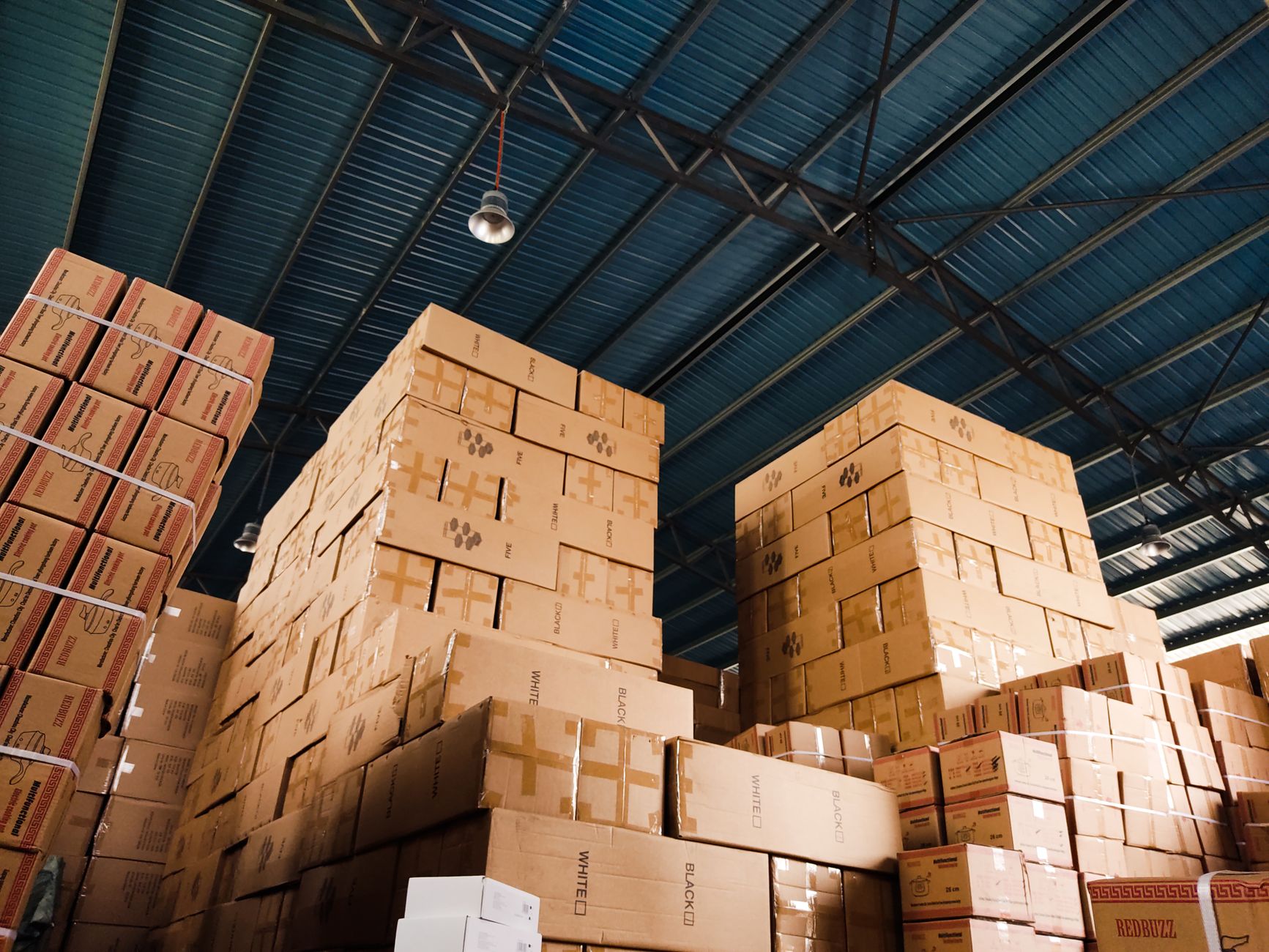
Photo by Ihsan Adityawarman on Pexels
Most brands face this question after their first few wholesale orders: keep selling direct to stores, or find a distributor who can place you in dozens of accounts at once. The right answer depends on your product margins, your operations capacity, and whether you already know what sells.
The core trade-off
A distributor takes 40 to 50 percent of your wholesale price and handles logistics, invoicing and collections for 100 or more stores. Direct outreach means you keep the full wholesale margin but you also pack every order, chase every payment, and field every customer service call.
If your wholesale price is $10, a distributor pays you $5 to $6 per unit and sells it to stores at $10. The store marks it up to $18 to $22 retail. You ship one pallet to the distributor's warehouse and they break it into small orders for each store.
Direct to stores, you invoice at $10 and the store still retails at $18 to $22. You ship 12 units to one shop, 24 to another, and 6 to a third. You send invoices, track payments (often net 30 or net 60), and answer questions about damaged shipments or delayed orders.
When direct makes sense first
Build direct relationships with independent stores when you need to learn which SKUs move, what shelf position works, and what buyers actually say when they see your product. You also keep cash flow tighter to your shipping date because you invoice the store directly instead of waiting for a distributor's payment cycle.
Direct works if:
- You have fewer than 50 wholesale accounts and can manage shipping and invoicing in a few hours per week.
- Your gross margin at wholesale is above 60 percent, so you can afford the time cost of operations.
- You want to test packaging, scent variants, or size options in real stores before you commit to a distributor's minimum order.
- You can deliver orders within one week of receiving a purchase order.
Example: You wholesale a body lotion at $12. Your landed cost is $4. Selling direct to 30 stores at an average reorder of 24 units per month gives you $8,640 in monthly revenue and $5,760 in gross profit. A distributor would pay you $6 to $7 per unit for the same volume, yielding $4,320 to $5,040 in revenue. The direct margin covers the cost of a part-time operations person or a few hours of your time each week.
Direct stops making sense when you spend more than eight hours a week on wholesale operations and you still can't reach 100 accounts. At that point the time cost exceeds the margin you protect.
When a distributor makes sense first
A distributor gets you to 100 or 200 doors faster than you can build them one by one. If your product already has proof of sell-through (reorder rates above 50 percent, or velocity data from your own DTC channel), a distributor will take you seriously and you skip the learning phase.
Distributor first works if:
- You have velocity data or reorder proof from at least 10 wholesale accounts.
- Your product is shelf-stable, ships easily, and fits standard retail categories (so the distributor's sales reps know where to place it).
- You can produce enough inventory to fill a distributor's opening order, typically 500 to 2,000 units depending on your SKU count.
- You want to focus on product development or marketing instead of logistics.
Example: You wholesale a deodorant at $8. Your landed cost is $3. A distributor pays you $4.50 and places you in 150 stores in the first 90 days, each ordering 12 units to start. That's 1,800 units and $8,100 in revenue to you in the first order. Reorders depend on sell-through, but if 50 percent of stores reorder an average of 12 units per quarter, you generate $4,050 per quarter from that cohort with zero logistics work on your side.
The risk: if the product doesn't move off the shelf, stores return it to the distributor and the distributor may drop your line. You lose the placement and you don't learn why it failed because you weren't talking to store buyers directly.
The hybrid path
Some brands build 20 to 30 direct accounts first, prove the product moves, then hand those accounts to a distributor and use the sell-through data to open new regions. You keep a few flagship or local accounts as direct relationships for feedback and testing, and let the distributor handle the rest.
This works if your direct accounts are willing to switch to ordering through a distributor (some prefer it because they get consolidated invoices and faster restocking; others resist because they lose direct contact with you). Always ask the store owner before you make the move.
How we compared
We compared distributor and direct channels on margin per unit, time cost, scale ceiling, and cash flow timing. These are reasoning-based comparisons, not test data. Your actual results depend on your product's sell-through rate, your cost structure, and the terms your distributor offers.
What to do this week
- Calculate your gross margin at wholesale and at a 50 percent distributor discount. If the distributor margin still covers your cost of goods and leaves 30 percent, a distributor is viable now.
- List your current wholesale accounts and estimate how many hours per week you spend on order processing, invoicing, and support. If it's above six hours for fewer than 40 accounts, you're near the ceiling for direct.
- If you have 10 or more wholesale accounts, pull reorder rates for the past six months. If 50 percent or more reordered at least once, you have the proof a distributor will want to see.
- If you're not sure which path fits, SellToStores offers a free retail distribution audit that reviews your margins, your current accounts, and your logistics capacity to recommend a starting channel.
Want this applied to your numbers?
The free audit runs your pricing and packaging through a buyer's checklist and sends you a written report.
Get my free auditMore to read

Does your margin survive a distributor? A worked example
A distributor can cut your profit per unit in half. Here is the math to check your own margin before you pitch one, with a worked example and a break-even rule.
October 19, 2026 · 3 min read

The Sell Sheet Checklist: What to Put on One Page Before You Email
A sell sheet checklist showing exactly what buyers need to see on one page: product details, pricing, proof points and contact info.
October 22, 2026 · 4 min read