Blog / October 30, 2026 · 5 min read
Health and Beauty Labeling Basics for US Retail (Where to Verify)
Tags:Retail compliance, Independent stores, Sell sheets, Channel strategy
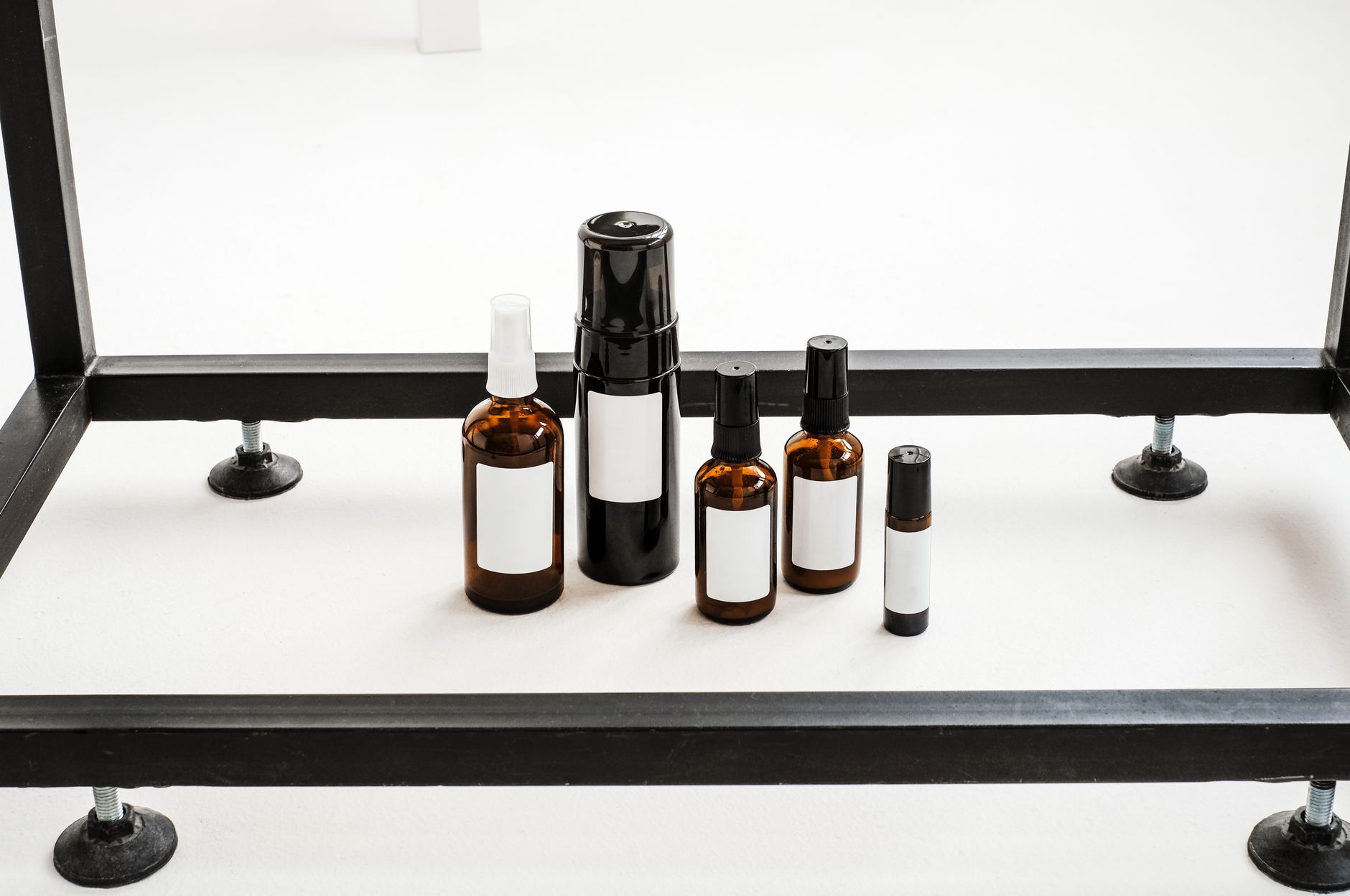
Photo by Vie Studio on Pexels
US cosmetic and dietary supplement labels follow federal rules enforced by the FDA. Four elements appear on nearly every compliant package: a principal display panel with product identity and net contents, an ingredient declaration, a manufacturer or distributor statement, and warning or caution statements when applicable. This post covers the basics and tells you where to verify the exact requirements before you print.
What goes on the principal display panel
The principal display panel is the part of the label most likely to be seen at first glance. For cosmetics, it must show the product identity (what it is) and the net quantity of contents. The net quantity appears in both metric and US customary units if the package is sold in the US, and the type size is regulated by the Fair Packaging and Labeling Act.
For dietary supplements, the principal display panel must include the term "dietary supplement" or a statement identifying the product as a supplement (for example, "vitamin C supplement"). The net quantity of contents follows the same dual-unit rule.
You verify the exact type-size requirements in 21 CFR 101.105 for supplements and 21 CFR 701.13 for cosmetics. Both are searchable on ecfr.gov.
Ingredient declaration
Cosmetics list ingredients in descending order of predominance by weight. The declaration uses the names established in 21 CFR 701.3 or, when no established name exists, the common or usual name. Ingredients present at 1% or less may appear in any order after those above 1%. Fragrances and flavors may be listed simply as "fragrance" or "flavor" without breaking out individual components.
Dietary supplements follow a different structure. The supplement facts panel lists dietary ingredients with amounts per serving, and other ingredients appear below in descending order of predominance. The format is detailed in 21 CFR 101.36.
Color additives require specific declarations. For cosmetics applied to the eye area or lips, every color additive must be listed individually. For other cosmetics, color additives may be listed as "may contain" followed by all colors that might appear across different shades in a product line, but only if the specific shade is identified elsewhere on the package.
Manufacturer or distributor statement
Every cosmetic and supplement label must show the name and place of business of the manufacturer, packer or distributor. If the name is not listed in a current city directory or telephone directory, the label must include the street address. The city, state and ZIP code are required.
When the statement names a distributor rather than the manufacturer, it must be qualified with "Manufactured for" or "Distributed by" or similar wording that makes the relationship clear.
Warning and caution statements
Certain product categories require specific warnings. Cosmetics that have not been adequately tested for safety must carry the statement: "Warning: The safety of this product has not been determined." Self-pressurized containers (aerosols) require flammability and pressure warnings as specified in 16 CFR 1500.14(b)(3).
Sunscreen products follow over-the-counter drug monographs and require a drug facts panel, active ingredient declaration, and specific use and warning statements. These are detailed in 21 CFR 201.66 and the sunscreen monograph in 21 CFR 352.
Dietary supplements must include the statement "This statement has not been evaluated by the Food and Drug Administration. This product is not intended to diagnose, treat, cure, or prevent any disease" if the label bears a structure/function claim.
Net contents and type size
Net contents must appear on the principal display panel in lines generally parallel to the base of the package. The declaration uses fluid ounces for liquids, ounces (avoirdupois) for solids, or count for items like tablets or capsules, alongside metric equivalents.
Type size increases with panel area. For a principal display panel of 5 square inches or less, the minimum height is 1/16 inch. Panels over 5 but not over 25 square inches require 1/8 inch. Panels over 25 but not over 100 square inches require 3/16 inch. Panels over 100 square inches require a minimum of 1/4 inch. The exact table appears in 21 CFR 101.105(i) for supplements and 21 CFR 701.13(c) for cosmetics.
Where to verify the rules yourself
Electronic Code of Federal Regulations (ecfr.gov): Search Title 21 for FDA rules. Part 701 covers cosmetic labeling, Part 101 covers food and supplement labeling, Part 201 covers drug labeling including OTC monographs.
FDA guidance documents (fda.gov): The FDA publishes guidance on cosmetic labeling, small business compliance, and supplement labeling. These are not binding law but show how the agency interprets the regulations.
Fair Packaging and Labeling Act: 15 USC 1451 to 1461 and implementing regulations in 16 CFR Part 500 cover net contents declarations and principal display panel requirements.
State regulations: California Proposition 65, for example, requires warnings for certain chemicals. Check the Office of Environmental Health Hazard Assessment (oehha.ca.gov) if you sell in California. Other states have ingredient restrictions or additional labeling requirements.
When in doubt, consult a regulatory attorney or a labeling compliance consultant before you print. The cost of a short review is far lower than the cost of relabeling or a warning letter.
Common mistakes to avoid
Missing metric equivalents is frequent. If you list 2 fl oz, you must also list the milliliter equivalent (59 mL). Rounding rules appear in 21 CFR 101.105(q).
Incorrect ingredient order happens when a contract manufacturer provides a list without verifying predominance by weight. The brand owner is responsible for the accuracy of the declaration, even if the manufacturer supplied the list.
Omitting the distributor qualifier ("Distributed by") when your company is not the manufacturer creates the impression that you made the product yourself, which can create liability issues if the actual manufacturer is not identified.
Using marketing terms in place of required statements does not satisfy the regulation. "Made with love in Brooklyn" does not replace the required name and place of business.
What to do this week
- Pull up 21 CFR 701 (cosmetics) or 21 CFR 101.36 (supplements) on ecfr.gov and compare your current label to the requirements for ingredient order, net contents format, and required statements.
- Measure your principal display panel in square inches and verify that your net contents type size meets the minimum height in the regulation.
- If you make structure/function claims on a supplement or drug claims on a cosmetic, schedule a call with a regulatory consultant to confirm your product is classified correctly and carries the right statements.
- Check whether your state has additional labeling requirements (California Prop 65, for example) and add any required warnings before your next print run.
Want this applied to your numbers?
The free audit runs your pricing and packaging through a buyer's checklist and sends you a written report.
Get my free auditMore to read

Barcodes for Retail: What UPC and GS1 Registration Actually Involve
Before independent stores stock your product, you need a valid barcode. Here's what UPC and GS1 registration involve and what you pay.
October 25, 2026 · 5 min read
Tags:Retail compliance, Independent stores, Channel strategy
Channel Conflict: Keep Stores, Your Site and Amazon From Fighting
Stop retailers from dropping your brand when they see lower prices on Amazon or your site. Four pricing rules and contract clauses that work.
October 29, 2026 · 5 min read
Tags:Channel strategy, Wholesale pricing, Independent stores, Distributors