Blog / October 27, 2026 · 5 min read
Minimum Order Quantities for Independent Pharmacies and Boutiques
Tags:Minimum orders, Independent stores, Wholesale pricing, Unit economics
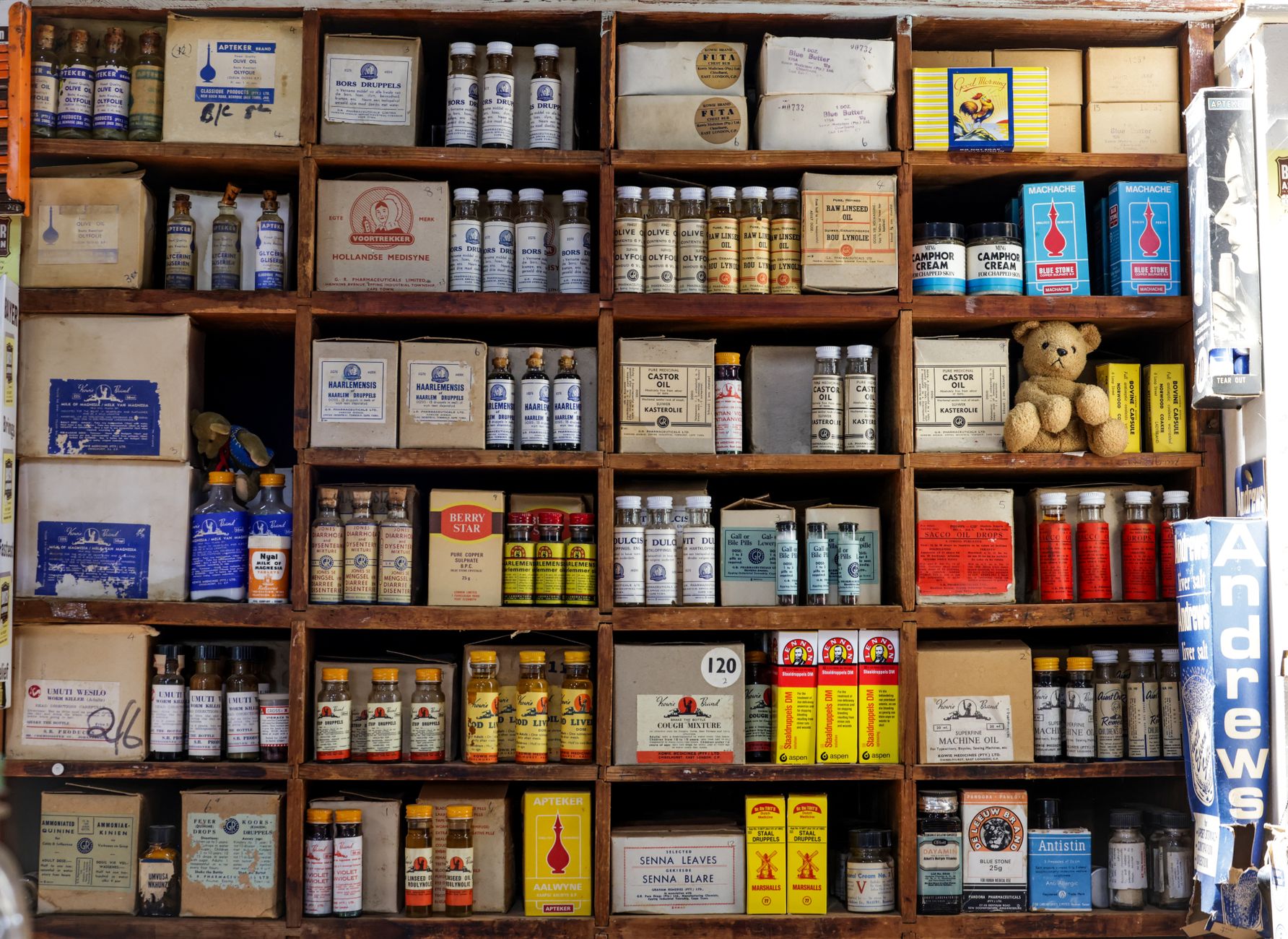
Photo by Magda Ehlers on Pexels
Independent pharmacies and boutiques operate with less cash and less shelf space than chains. Your minimum order quantity determines whether they can afford to test your product or walk away.
Set it too high and you eliminate 60 to 70 percent of potential accounts. Set it too low and you lose money on fulfillment, especially if the account never reorders.
What independent stores can typically afford
Most independent pharmacies and boutiques place opening orders between $150 and $400 at wholesale. Stores with under 1,000 square feet often cap first orders at $200 to $250.
If your MOQ requires a $500 or $600 opening order, you are pricing out the majority of independents. They will not stretch their budget. They will buy a competing brand with a lower barrier.
A workable MOQ for this channel is typically one case pack per SKU, with a total opening order of $150 to $300 wholesale across your line.
Case pack size affects both shipping cost and retailer commitment
Case packs are the number of units bundled together for shipping. Common sizes are 6, 12 or 24 units.
Smaller case packs lower the entry cost but raise your per-unit fulfillment expense. Larger case packs improve your shipping efficiency but force the retailer to commit more capital and more shelf facings before they know if the product sells.
For products with a wholesale price under $8, a case pack of 12 is common. For products between $8 and $15 wholesale, a case pack of 6 works better for independents. For products over $15 wholesale, consider allowing single-unit orders on the opening purchase, then requiring a case pack of 6 on reorders.
If you sell a line with multiple SKUs, let the retailer mix SKUs within a case. A mixed case of 12 units across three scents or formulas gives the store flexibility and increases the chance they will carry your full range.
Calculate your breakeven order value
Your MOQ must cover the direct cost of fulfillment or you lose money every time a store places one order and disappears.
Use this method:
- Add your pick, pack and ship cost per order (labor plus materials, typically $8 to $15 for a small box).
- Add payment processing fees (around 3 percent of order value).
- Add the cost of any samples or point-of-sale materials you include.
- Divide this total cost by your gross margin percentage.
The result is your breakeven order value at wholesale.
Example: Your fulfillment costs $12 per order, processing is 3 percent, and you include $5 in samples. Your gross margin is 50 percent. Breakeven is ($12 + $5) / 0.5 = $34, plus 3 percent for processing, so roughly $35. Any order above $35 wholesale covers its own fulfillment cost. Orders below that amount lose money if the account does not reorder.
If your breakeven is $35 and your product wholesales for $10, a case pack of 6 ($60 wholesale) gives you a cushion. A case pack of 3 ($30 wholesale) does not.
Tiered MOQs for opening orders and reorders
Many brands set a lower MOQ for the first order and a higher one for reorders. This reduces the barrier for new accounts while ensuring that repeat orders are economical.
A typical structure:
- Opening order: $150 minimum, case packs of 6, mix-and-match allowed.
- Reorder: $200 minimum, case packs of 12, or $250 with free freight.
This approach works if you track account history and communicate the reorder terms clearly on the first invoice.
Do not surprise the retailer. State the reorder MOQ in your line sheet, on your order form and in your confirmation email.
Free freight thresholds
Offering free freight at a specific order value encourages larger purchases and reduces your per-order shipping cost as a percentage of revenue.
Set the threshold at roughly three times your breakeven order value. If your breakeven is $100, offer free freight at $300. This ensures the order is profitable even after you absorb shipping.
Independent stores will often add one or two extra case packs to hit the free freight threshold, especially on reorders. Make the threshold visible on your order form and in your email follow-ups.
Payment terms and how they interact with MOQ
Net 30 or net 60 payment terms increase the retailer's willingness to place a larger opening order because they do not pay immediately. If you require payment up front, you must accept a smaller MOQ or lose accounts.
If you offer terms, your MOQ can be 20 to 30 percent higher than if you require prepayment. A $250 MOQ with net 30 terms is roughly equivalent in buyer psychology to a $180 MOQ with payment due at order.
Terms carry risk. Vet new accounts with a credit application or start with a prepaid opening order and offer terms after the first successful purchase.
When to reject small orders
If a retailer asks for an order below your stated MOQ, you have three options: accept it and lose money, reject it and lose the account, or negotiate.
Negotiation works when the retailer is willing to prepay, cover shipping, or commit to a reorder schedule. For example, if your MOQ is $200 and the store offers $150, you might accept the $150 order if they prepay and cover the shipping cost.
Do not make exceptions without getting something in return. Every exception sets a precedent and other accounts will ask for the same treatment.
Test your MOQ with ten accounts
Before you print it on all your materials, test your MOQ with ten independent stores. Send your line sheet with the stated minimum and see how many place orders.
If fewer than four out of ten order, your MOQ is likely too high. If eight or nine order and their average order value is twice your minimum, your MOQ is too low and you are leaving money on the table.
Adjust and test again. The right MOQ will convert 50 to 60 percent of interested retailers and produce an average order value 20 to 40 percent above the minimum.
What to do this week
- Calculate your fulfillment cost per order and divide by your gross margin to find your breakeven order value.
- Set a case pack size that results in a wholesale order value at least equal to your breakeven, or slightly above.
- Write your MOQ and free freight threshold on your line sheet and order form.
- Contact ten independent pharmacies or boutiques and offer your line at the new MOQ to see how many convert.
Want this applied to your numbers?
The free audit runs your pricing and packaging through a buyer's checklist and sends you a written report.
Get my free auditMore to read
Tester and Display Programs: When They Pay for Themselves
Free testers and branded displays cost money. Here is how to calculate whether they will increase sales enough to cover their cost.
November 1, 2026 · 5 min read
Tags:Samples and testers, Independent stores, Unit economics, Reorders

How to Read Sell-Through Reports and Time Your Reorder Push
Learn to interpret retailer sell-through data, calculate velocity, spot reorder timing signals, and approach small stores for restocks without guessing.
October 31, 2026 · 5 min read
Tags:Reorders, Independent stores, Unit economics, Buyer outreach